
Garaash village in Beletweyne, Gumbe and Banaaneey villages in Jowhar district, Hirshabelle state, Somalia, 2025.
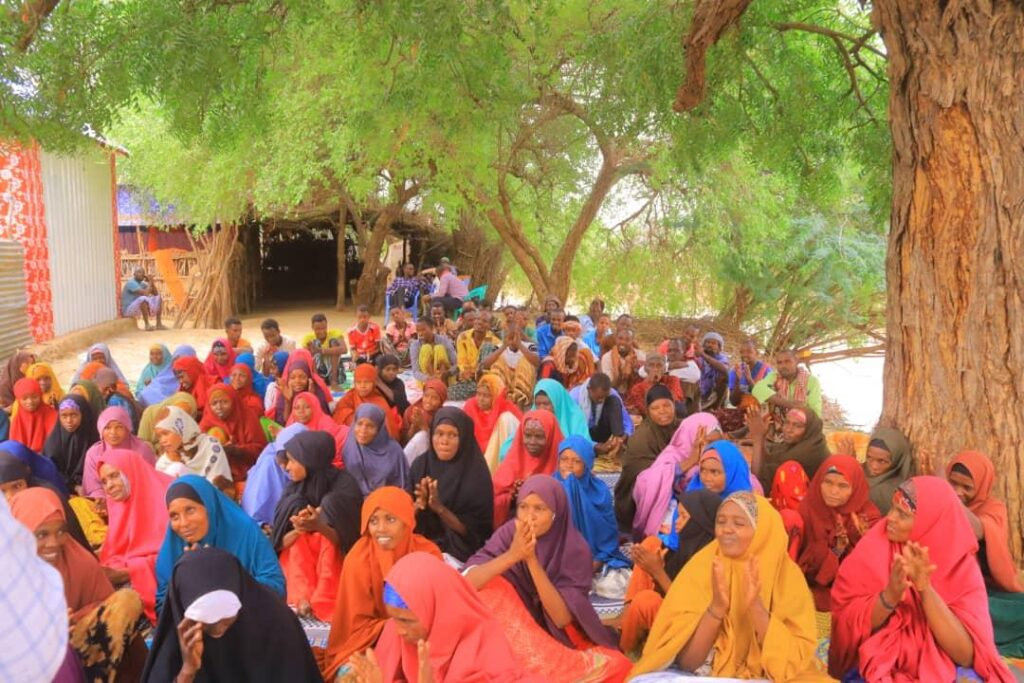
ACCESS supported Nuros9solutions that implemented the funded IOM-Somalia project of women-led farming cooperatives to prepare, receive and begin operating solar-powered irrigation systems designed to reduce energy constraints and strengthen climate-resilient production.
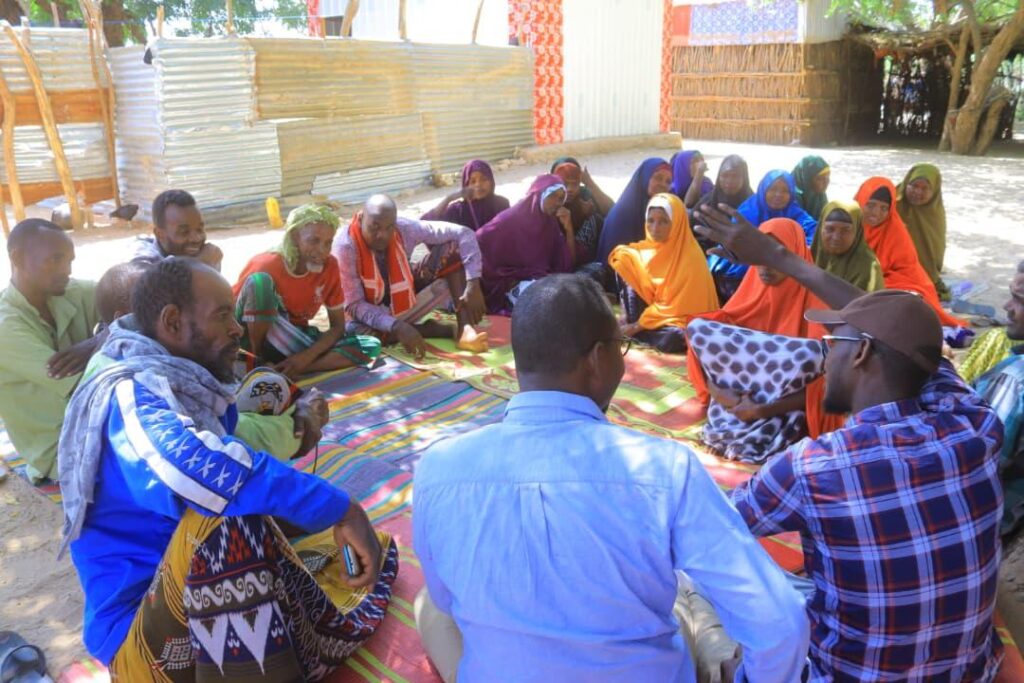
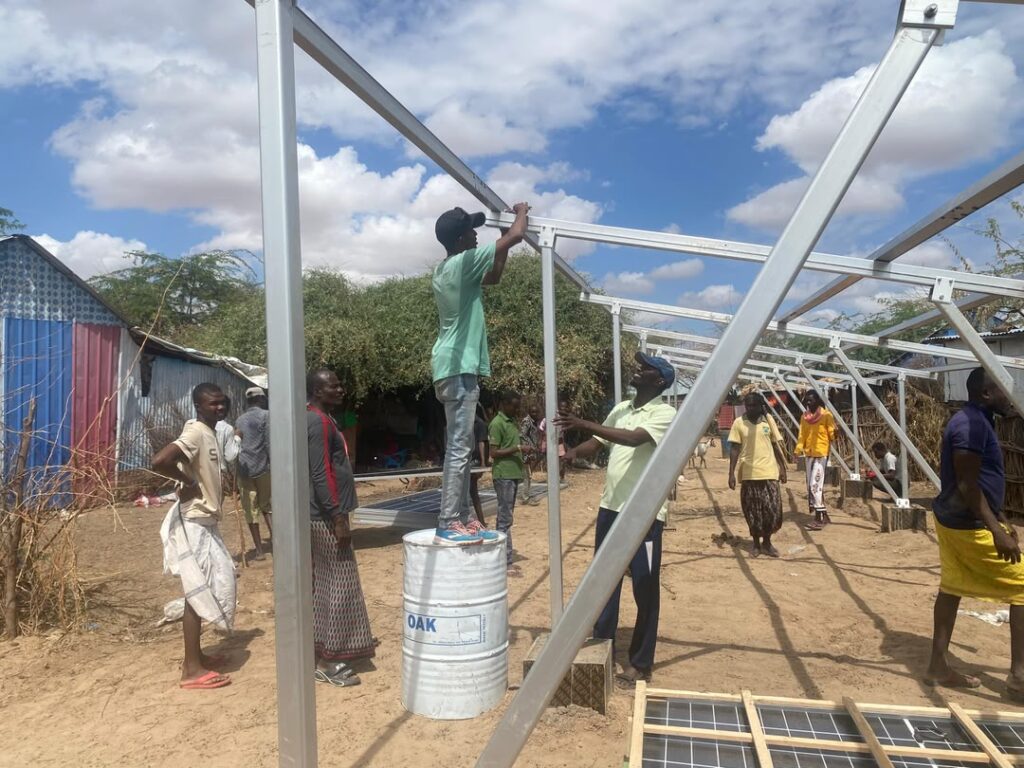
The work combined technical installation with community organization. In the target villages, equipment including solar panels, an inverter, pump and piping was delivered, secured and installed with active community participation. Residents prepared access routes and trenches, while local committees established arrangements for asset custody and system security.
Across the target villages, nine cooperatives representing 415 members, more than %80 of women finalized membership lists, bylaws and visual identities and advanced their certification process. Women cooperative leaders played a central role in site preparation, governance and accountability, helping align the new infrastructure with productive use and long-term maintenance.
This project set out to help women farmers in Hirshabelle move from a farming system that was expensive, unpredictable, and dependent on diesel engines toward one that is organized, affordable, and powered by clean energy. Implemented between August and December 2025 by Nuros9 Solutions with support from IOM Somalia, the initiative focused on two districts, Jowhar and Beledweyne, where women carry the heaviest burden of food production but often have the least influence over farming decisions.
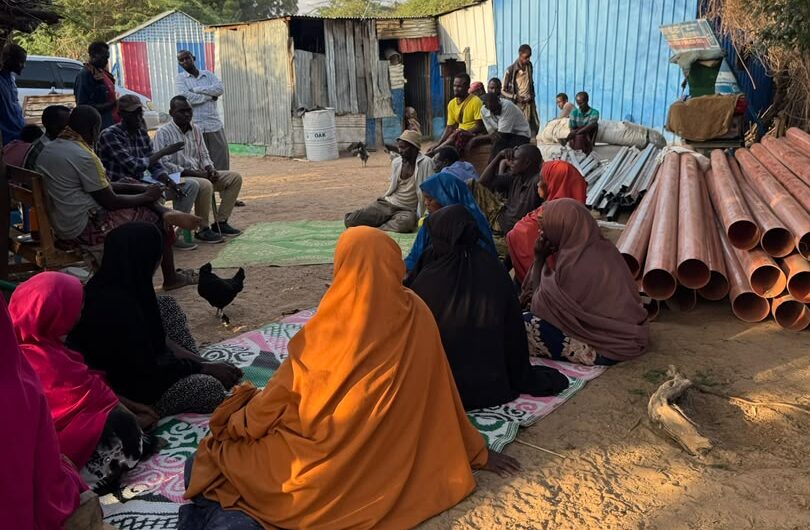
Rather than introducing technology first, the project began by strengthening the people and structures expected to manage it. This meant forming and formalizing cooperatives, building leadership among women, improving record-keeping and accountability, and ensuring local authorities and elders were aligned with the process. Only once these foundations were strong did the project move into delivering and installing solar-powered irrigation systems designed to reduce fuel costs and stabilize water access for farming.
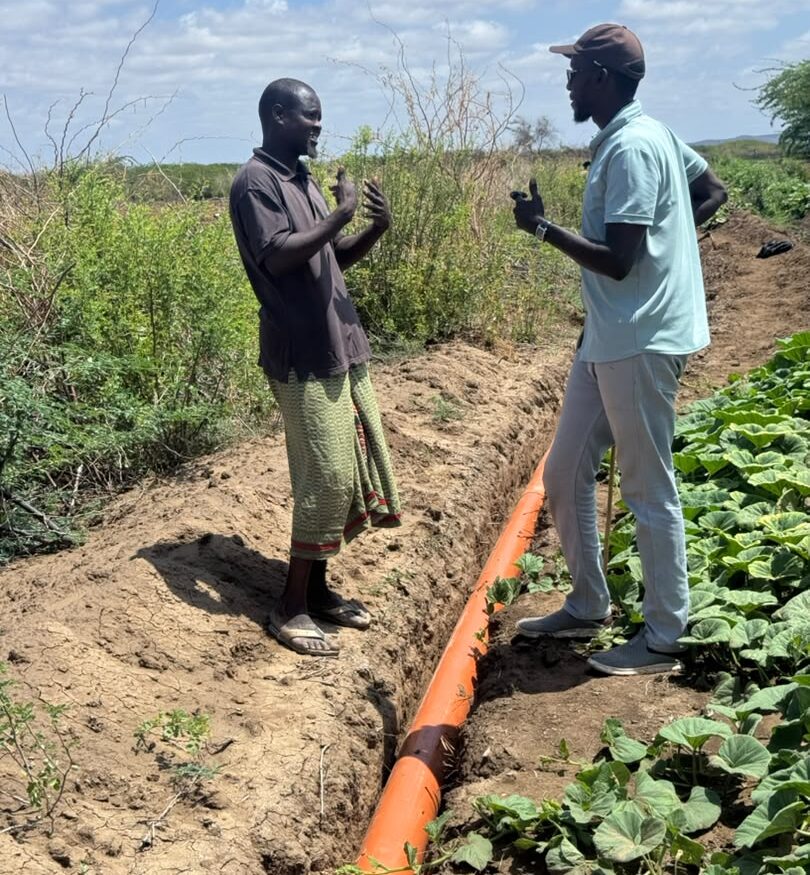
By the end of the project, the shift was visible: women who once worked in loosely organized groups were now leading structured cooperatives, community committees were actively safeguarding solar equipment, and farms across all three villages were preparing for more reliable irrigation in the coming planting seasons.
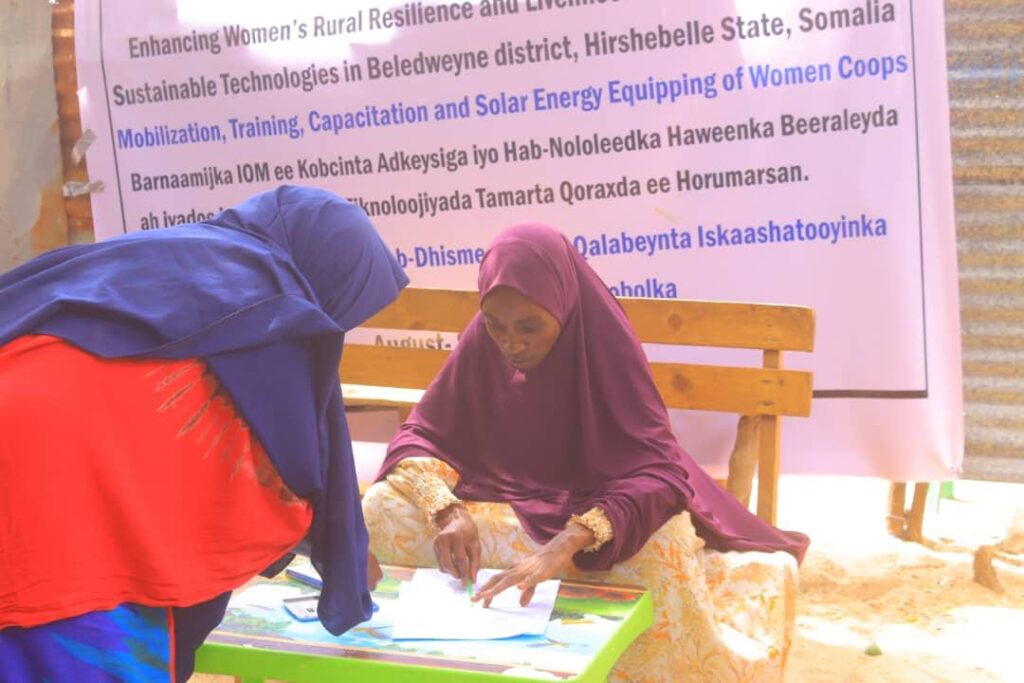
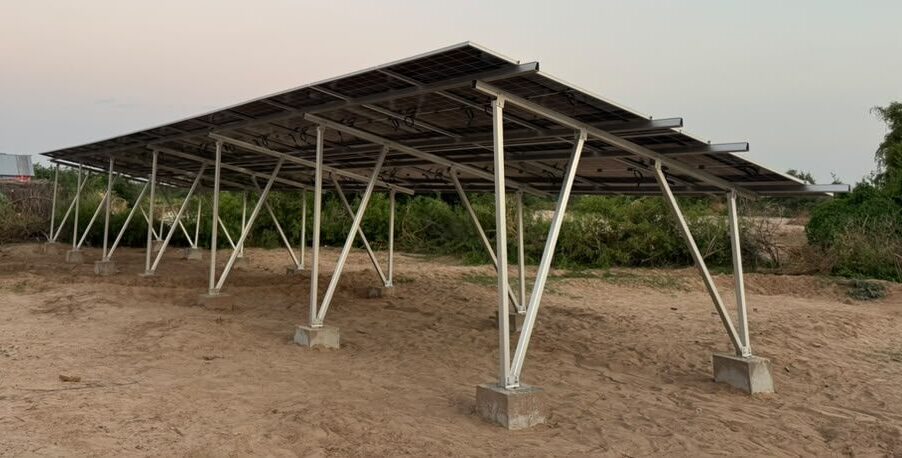
the above two pictures; the left side one is the Signing the attendance sheet and the right side one is one of the installed system
The project paired clean-energy infrastructure with the local institutions needed to protect it, manage it and translate reliable water access into stronger rural livelihoods.